

Return to our main case study page
Solutions
/
Case Studies
Blackhillock 320kV Replacement Scheme
Project Details
Project Name: Blackhillock 320kV Termination Replacement Scheme
Asset Owner: SSEN (Transmission)
GPS' Client: NKT HV Cables AB
Completion: April 2023
Project Overview
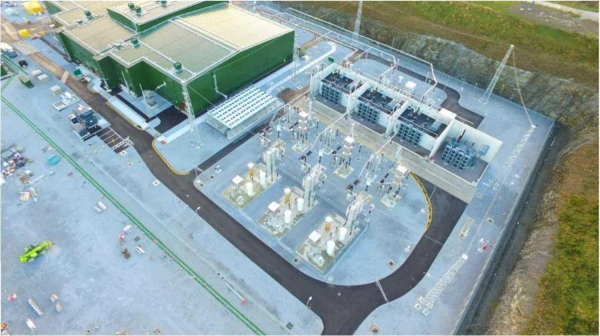
The first phase of the CMS project links Spittal (in Caithness) and Blackhillock (in Moray) with ±320kV, 113km submarine HVDC cables. However, the scheme was designed as a three, four or five multiterminal scheme allowing for future extension to connect the Shetland isles and other renewable generation in the future.
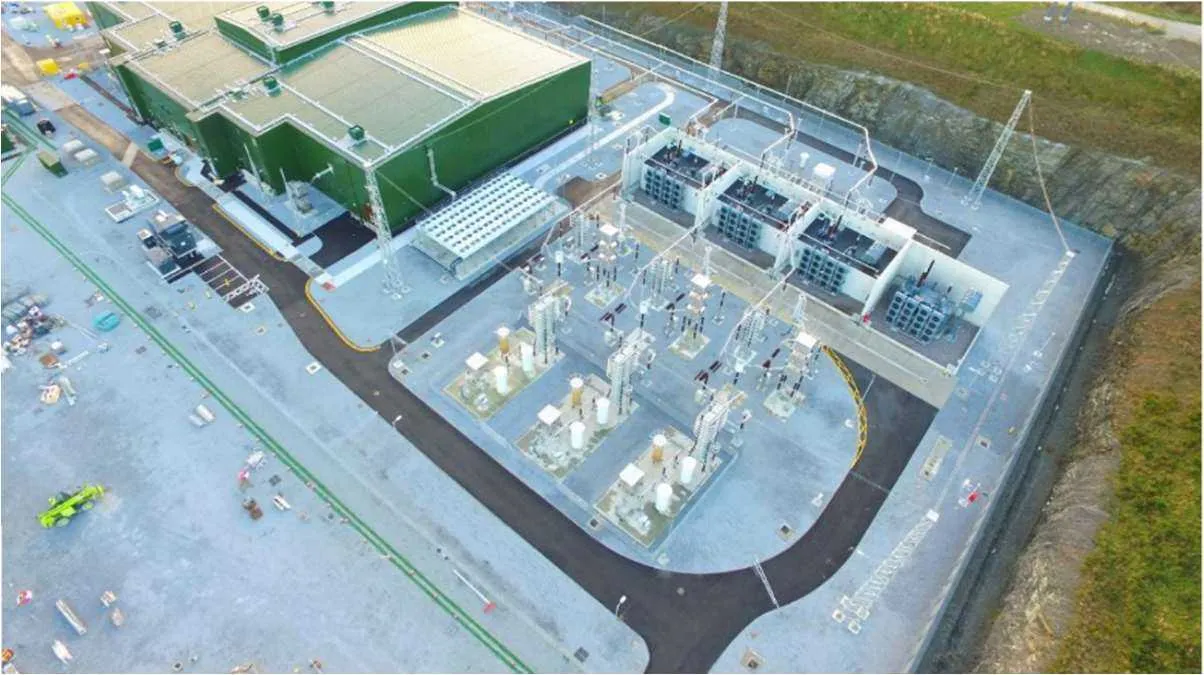
The Caithness Moray HVDC link terminates at Blackhillock HVDC Convertor station in Keith, Moray and the overall cable connection scheme was completed in 2017. Since then, a latent defect in the 320kV cable terminations (within the HVDC hall) prompted a scheme to be developed whereby both terminations (CSE’s) were to be replaced and returned to service during the planned operational shutdown outage in 2023.
Scope of Works
NKT HV Cables AB were contracted by SSEN (Transmission) to develop a design whereby both terminations could be replaced within the planned station shutdown outage (Feb 23 to Apr 23). GPS worked closely with our Client NKT HV Cables AB to deliver a turnkey solution (Design and Build) for replacing the terminations in the short outage window.
GPS scope of work included:
- Detailed Civil and Cable System Design inc. Joint Bay Civil design, Cable System Thermo/Mechanical Calculations, Cable Pulling calculations, Termination General Arrangement and all associated Temporary Works designs.
- All necessary Project Management, technical/interface and design support, Site Management and Supervision of all Civils, Cabling, Jointing, Terminating and Commissioning works.
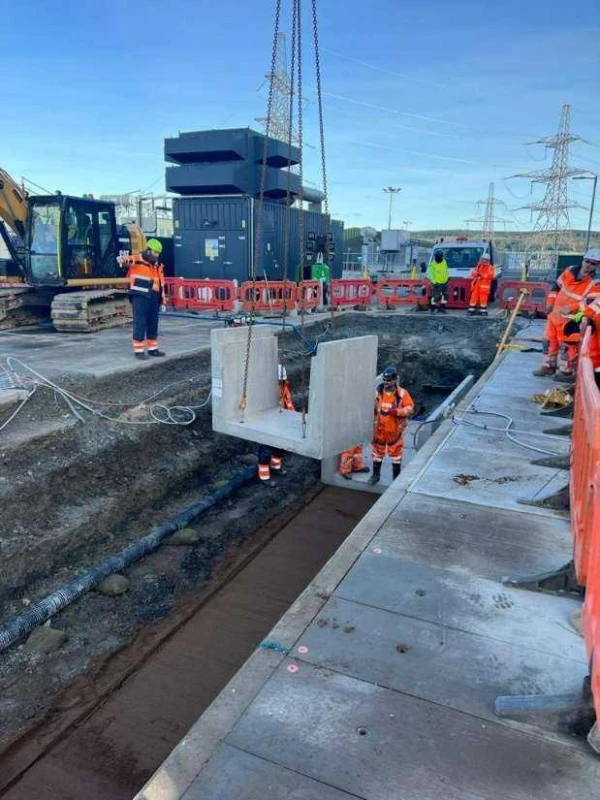
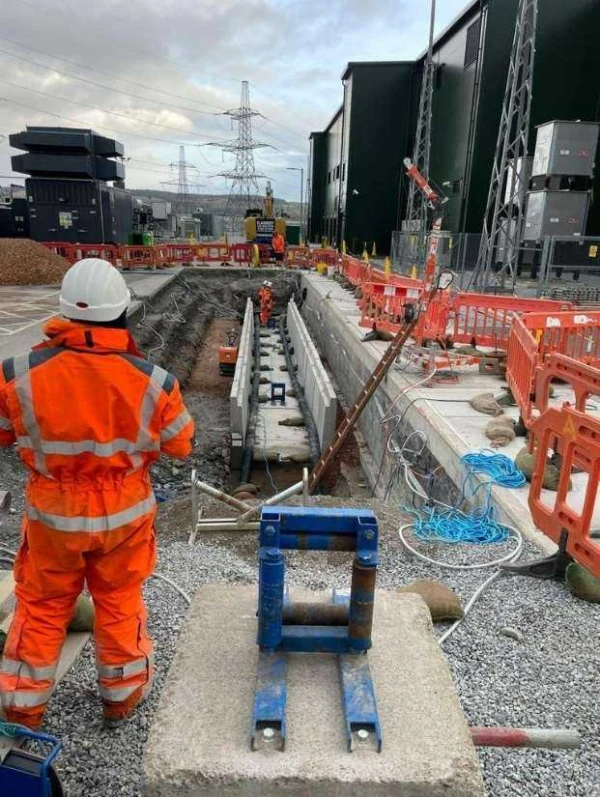
- Establish a new joint bay position within the HVDC convertors station access road inc. a buried precast joint bay solution for housing of new HVDC joints
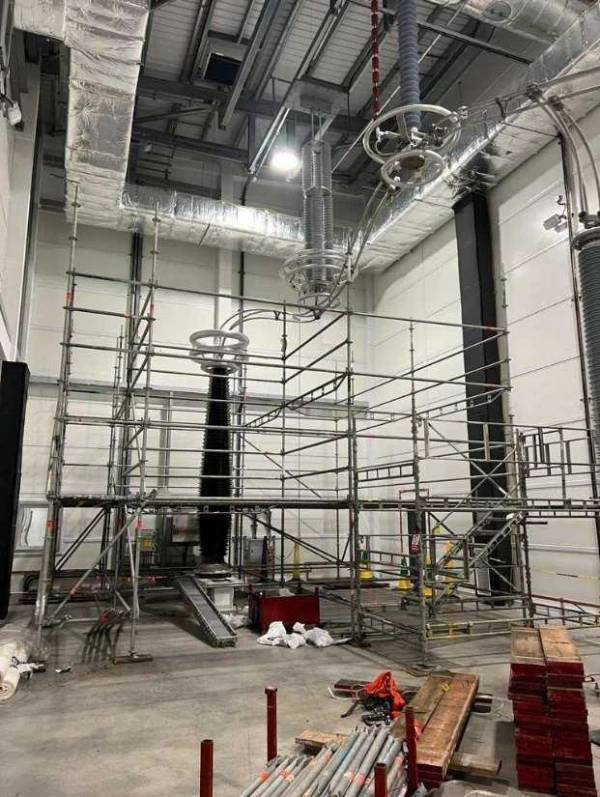
- Design, Erect, Maintain and Dismantle 2nr bespoke scaffoldings to access and lift CSE’s for removal and new installation (without the need to dismantle and re-erect)
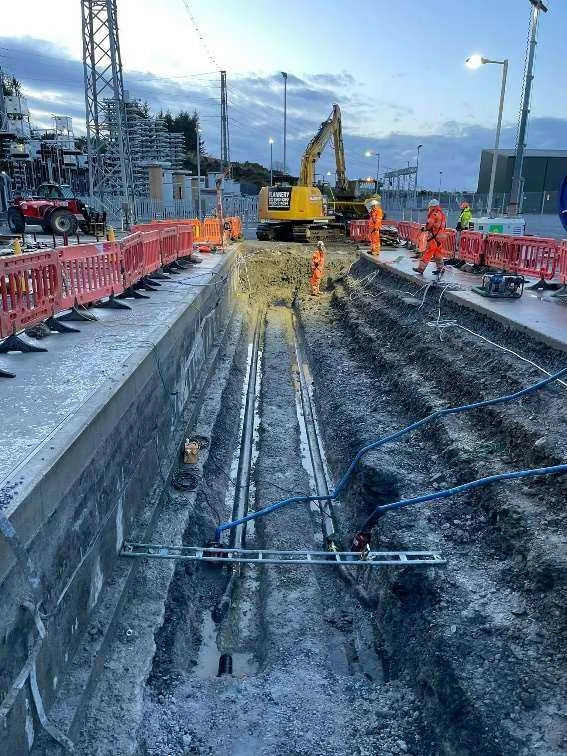
- Remove concrete encasement to HVDC cables and ducts
- Removal of CableCem© Cementous grout from cable and ducts
- Remove existing cable lengths from new joint bay position to both terminations
- Clean, jet, prove and CCTV the ducts
- Removal and disposal of redundant CSE’s (Cable Sealing End) terminations including all oil handling and safe disposal
- Drum offloading and handling onsite
- Installation of new 320kV HVDC cable sections between new joint bay and CSE positions
- Sheath Testing of newly installed cable sections
- Design, Erect, Maintain and Dismantle bespoke protection and lifting scaffoldings to facilitate 2nr new HVDC joints
- EHV jointing support to NKT HV Cable AB to make 2nr new Joints and 2nr new CSE
- Reinstate CableCem© Cementous grout to cable ducts
- Backfill joint bay with CBS surround, Concrete lids, Tiles and tape to SSEN transformer spec road
- Reinstate and make modifications to underground earth mat at new joint bay position
- Reinstate tarmac, convertor station furniture and line painting to original
- Provide engineering and supervisory support to NKT HV Cable AB during HVPD testing and ‘re-commissioning’works. This included a full end to end retest of the HVDC link between Blackhillock and Spittal (113km)
Key Project Engineering Challenges
The Blackhillock HVDC Termination Replacement Project presented GPS with a number of Engineering challenges to overcome. These challenges consisted of:
- Safe removal of concrete surround to HVDC ducts without damaging the existing cable contained within whilst also protecting and maintaining the integrity of the parallel fibre optic cable laid directly between both HVDC cables. GPS developed a method to remove the concrete by injecting a ‘cracking agent’ into the concrete duct block at strategic positions along the length of the new joint bay position. This allowed the concrete to break without any destructive mechanical means (i.e. peckers/breakers). GPS carried out numerous trials on mock up duct blocks to establish the most effective way of applying the ‘cracking agent’.
- Removal of CableCem© cementitious grout from the ducts (with HVDC cables contained within) posed another engineering challenge for the project team. GPS had to deploy a method of combine high pressure jetting and simultaneous pulling of the cable to remove the redundant cable sections from the ducts. Due to the size of the cable and the internal diameter of the duct, there was insufficient space to rod a jetting eye into the duct. A systematic approach of jetting 2/3m of CableCem followed by pulling out the cable resulted in the most effective method despite the protracted time scales for doing so. GPS deployed 24hr working during these activities to maintain programme.
- Designing and implementation of final bay joint arrangement. Due to the thermo-mechanical forces present within the HVDC cable system combined with the position/depth of the joint bay within the main transformer spec access road, the joints had to be established within a precast concrete (made of cable troughs) enclosure within the road. The cables also had to transition vertically (over a short distance) from the existing ducts. Vertical locking bends were also incorporated in the system to ensure thermo-mechanical design parameters were met. This all led to a complex and technically challenging joint bay arrangement as illustrated below.