

Return to our main case study page
Solutions
/
Case Studies
Shetland 320kV HVDC Link
Project Details
Project Name: Shetland 320kV HVDC Link
Asset Owner: SSEN (Transmission)
GPS' Client: NKT HV Cables AB
Completion: June 2023
Project Overview
Once complete the Shetland HVDC project will allow for the export of renewable energy generation from Shetland to the UK mainland, connecting Shetland to the Nation’s Electricity
Transmission System for the first time.
The project consists of a high voltage direct current (HVDC) link. including approximately 260km of cabling, all but 10.5km of which will be
in the sea. A 320/132kV substation and HVDC convertor station has been constructed at Upper Kergord on Shetland with a HVDC Switching Station being constructed to facilitate connection to the existing Transmission system at Noss Head in Caithness.
Scope of Works
GPS were contracted by NKT to provide a turnkey project management and installation scope of works to install both HVDC Landside cable connection packages between shore and Noss Switching station (Caithness) and shore and Kergord Convertor Station (Shetland).
Package A; Caithness (Shetland Link)
- 5km (2.5km route) of 320kV HVDC cable installation between Shore Transition Joint Bay (TJB) and the new Switching station at Noss, Wick.
Package D; Caithness (Spittal Link)
- 5km (2.5km route) of 320kV HVDC cable installation between Shore Transition Joint bay (TJB) and the new Switching station at Noss, Wick.
- 1km (500m route) of 320kV HVDC cable installation between the new Switching station at Noss and newly establish joint bay on existing Caithness Moray (Spittal) link.
Package A; Shetland (Shetland Link)
- 16km (8km route) of 320kV HVDC cable installation between Shore Transition Joint Bay (TJB) and the new Convertor Station at Kergord, Shetland.
GPS scope of work included;
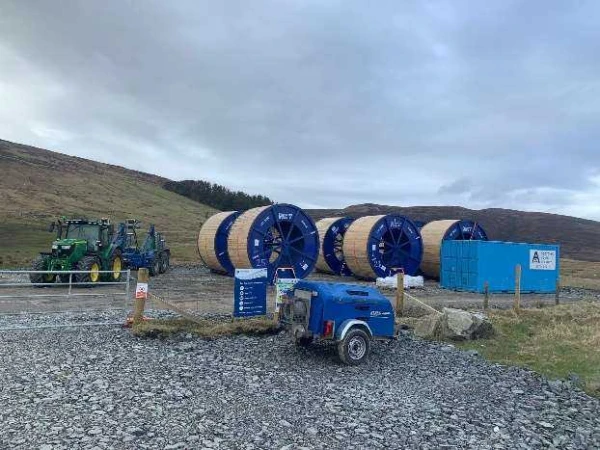
- Drum logistics from 2nr Ports (Wick and Shetland) to installation positions along each route - 14nr Drums at Caithness,16nr Drums at Kergord
- All necessary Project Management, technical/interface support and Site Management of the Cable Installation works
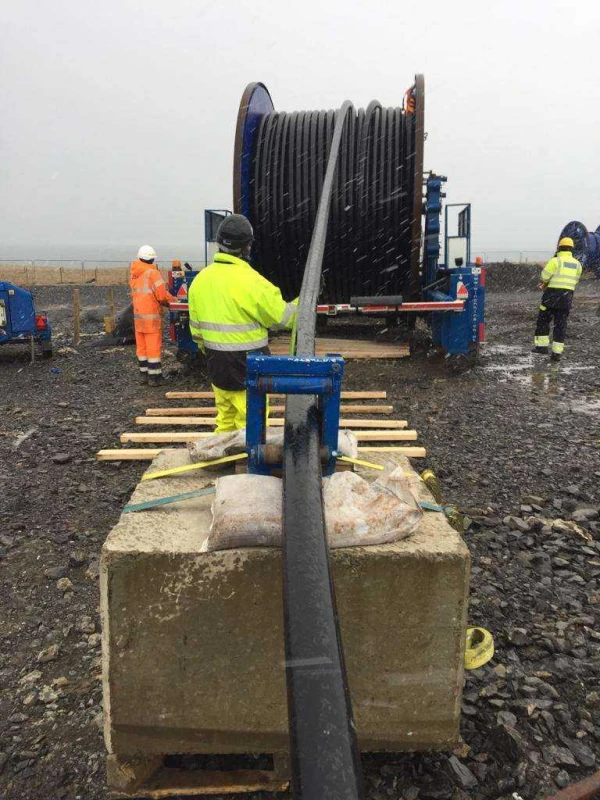
- Cable Pulling Design – including pulling calculations, layouts and temporary works
- HVDC termination steelwork assembly and cleating arrangement
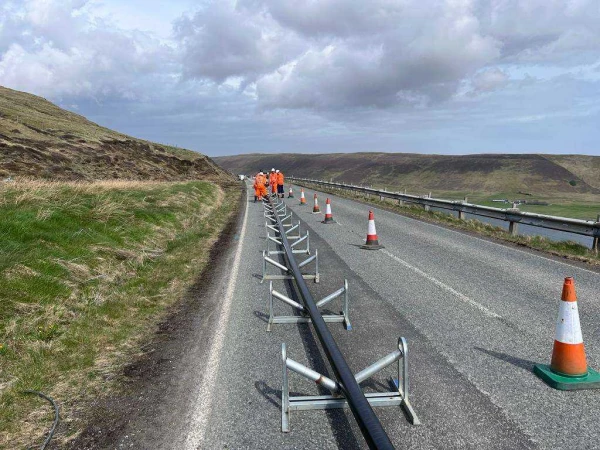
- Installation of all cable sections
- Jointing and Terminations support to NKT for both HVDC joints and terminations - 24nr 320kV HVDC Joints, 8nr 320kV HVDC Terminations (2nr Gas, 6nr Oil), 4nr Transition joints (Subsea to Land)
- Sheath testing of all installed cable lengths
- Installation of 15.5km of fibre optic cable
- Splicing and terminating of all fibre optic cables (inc. all splicing, terminating, patching and OTDR testing)
Key Project Engineering & Logistical Challenges
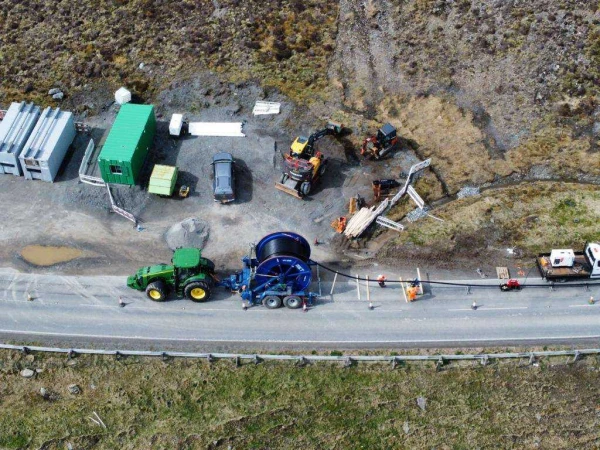
The Shetland HVDC Cable Project presented GPS with a number of Engineering and Logistical challenges to overcome mainly driven by the remote location and terrain along the designed route. GPS had to develop a number of solutions for managing drum logistics from Port to Site and onwards to their pulling locations along the cable corridor. These drum movements included conventional and non-conventional methods using cranes, low loaders, tractor and drum trailers and specialist towing plant to transport 32 tonne cable drums along steep terrain haul roads (one of which 22deg incline).
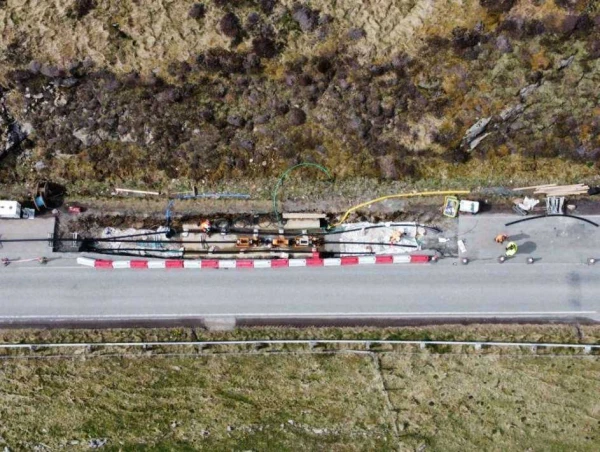
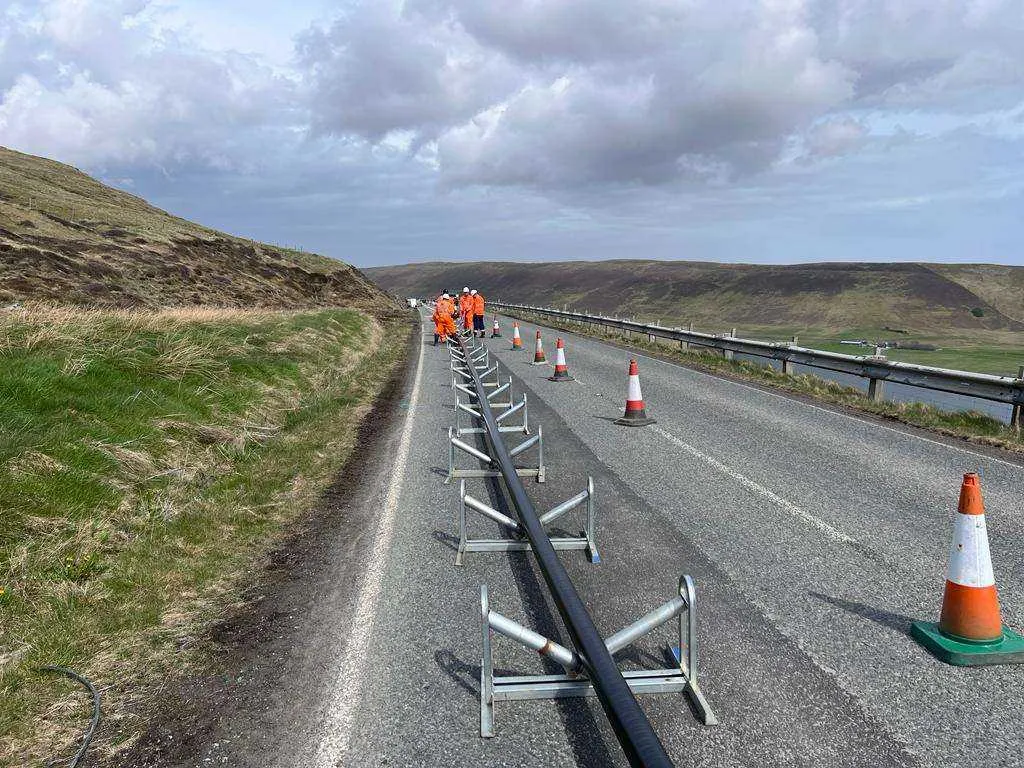
The project also faced engineering challenges with regards to section lengths designed by the client whereby Land cable sections were designed and installed in 1100m sections (joint bay to joint bay) to both minimise number of joints within the system and maximising drum capacities supplied by NKT. A 3.3km section of public highway along the Shetland route demanded a bespoke ground overpull and joint bay pull through method of installing cables safely and efficiently to eliminate road closures on the island.